Urbanism
The Future of Cities: Key Trends Shaping Urban Living
Update: January 2026
Much of my work at Toyota over the past seven years has sat beyond the vehicle itself, looking at how people move through cities, access services, and navigate the changing relationship between transport and urban form. This article, below, grew out of that work.
I wrote it in late 2023 to articulate trends I'd been thinking about: intelligent urban environments, density and sprawl, ageing populations, polycentric development, and sustainability. It has shaped how I approach design problems where vehicles, infrastructure, and urban life intersect.
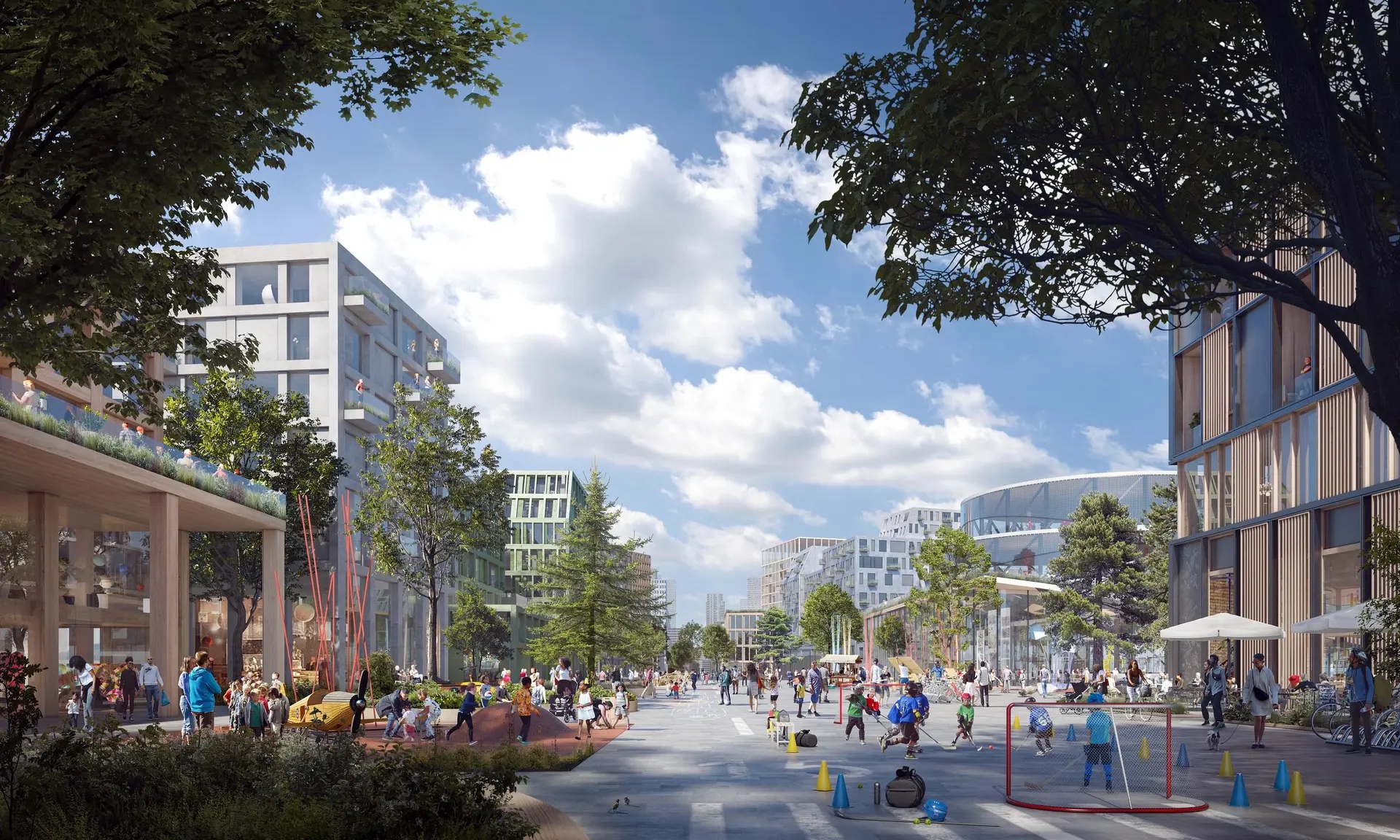
Since then, several of these trends have moved forward. Toyota's Woven City completed its first phase in October 2024 and welcomed residents in September 2025, an early test case for autonomous mobility and integrated smart systems, though questions of scalability remain open.
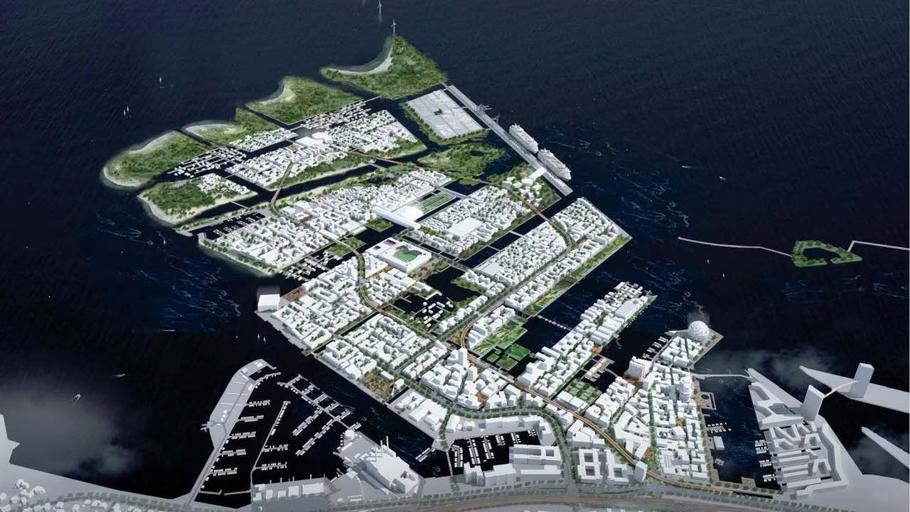
In Scandinavia, Copenhagen has cut emissions by 80 per cent since 2005 and is building districts like Nordhavn around renewable energy and soft mobility; Oslo now ranks second in the 2025 IMD Smart City Index. The 15-minute city concept has become formal policy in Paris and continues expanding through Barcelona's Superblocks. Amsterdam's circular economy efforts have moved beyond pilots in construction waste. Yet the picture is uneven: research suggests proximity planning may accelerate gentrification, and scaling circular initiatives beyond demonstration projects remains challenging.
If I were writing this today, I would give more weight to these tensions, the gap between ambition and implementation, and the equity questions that shadow most smart city interventions.
The Future of Cities: Key Trends Shaping Urban Living
First published in 2023
Urban design is changing, shaped by technology, shifting demographics, and a growing focus on sustainability. These changes are not uniform or straightforward. Instead, they play out differently depending on local context and priorities. In the following, I look at several patterns: the emergence of intelligent urban environments, responses to sprawl and congestion, adapting to an ageing population, the idea of polycentric development, and the ongoing need for sustainable approaches. My aim is to surface some of the tensions and trade-offs that cities face as they adapt, rather than to offer a single vision of the future.
The Rise of Intelligent Urban Environments
The idea of the 'smart city' has gained traction as cities look for ways to manage resources more effectively and respond to growing pressures. Technology, whether sensors, data analytics, or automation, offers new tools for monitoring infrastructure, managing transport, and improving energy use. In practice, these systems are often introduced incrementally, shaped by local needs and constraints. The promise is greater efficiency and responsiveness, but the reality is often more complex.
Some European cities, including Amsterdam, Barcelona, and Copenhagen, have experimented with smart city initiatives. These range from traffic management and street lighting to waste collection. The results are mixed: while there are clear gains in some areas, the challenge remains to ensure that technology serves real needs and that improvements are felt by residents, not just measured in efficiency metrics.
Implementing smart city technologies brings its own set of challenges. Data privacy, security, and the cost of new infrastructure are ongoing concerns. Progress depends on collaboration between city authorities, private partners, and residents. In my experience, the most effective initiatives are those that involve people early and focus on solving specific, shared problems.
Combating Urban Sprawl and Congestion
Sprawl and congestion are persistent issues in many cities. They contribute to pollution, longer commutes, and a lower quality of life. Responses often focus on increasing density and improving mobility, but these are not simple fixes. Each approach brings its own set of trade-offs and requires careful consideration of local context.
Compact, mixed-use neighbourhoods that support walking and reduce reliance on cars are often cited as a way forward. In practice, this means rethinking zoning and land use, and finding ways to bring housing, work, and recreation closer together. The challenge is in balancing these goals with existing patterns and the needs of different groups.
Public transport remains central to tackling sprawl and congestion. Reliable and accessible systems can make sustainable travel a practical choice for more people. Expanding and improving these networks, whether through buses, light rail, or bike-sharing, requires sustained investment and a willingness to adapt to changing patterns of use.
Autonomous vehicles are often discussed as a future influence on urban mobility. While they may offer benefits in safety and efficiency, there are open questions about their impact on congestion and sprawl. The way cities respond, through policy, planning, and integration with existing systems, will shape whether these technologies support or undermine broader goals.
Adapting to the Needs of an Ageing Population
Many cities are now adapting to an ageing population. This shift prompts a reconsideration of how urban spaces and services support people as they age, with a focus on enabling independence and maintaining quality of life.
Assistive technologies, such as sensors, voice controls, and remote monitoring, can help older adults live independently for longer. Integrating these features into new and existing housing is becoming more common, though the pace and approach vary widely between cities.
Affordability is a persistent concern, especially for older adults on fixed incomes. Some cities are exploring age-restricted communities, subsidies, or universal design principles to make housing more accessible and adaptable. The effectiveness of these measures depends on local context and the resources available.
Social inclusion and accessibility are also central to age-friendly cities. This means ensuring that public spaces, transport, and community services are usable by all. Opportunities for intergenerational interaction and social engagement can help address isolation, though these are not always easy to create or sustain.
Polycentric Development
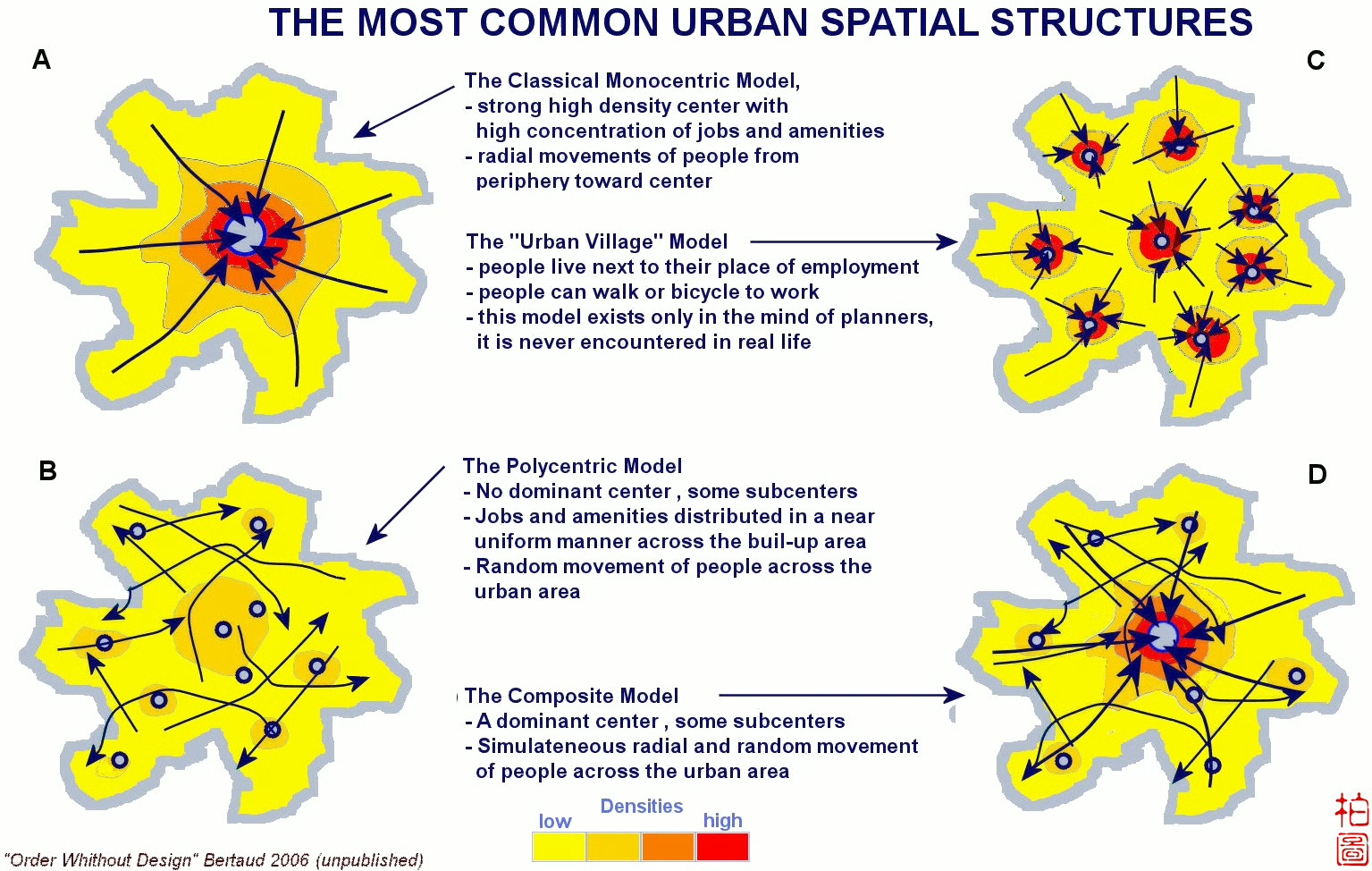
Polycentrism, the idea of developing networks of interconnected cities rather than focusing growth in a single centre, has become more prominent. The aim is to distribute economic activity and population more evenly, reducing pressure on large urban cores. In practice, this approach depends on strong coordination and a willingness to share resources and responsibilities.
European countries have been at the forefront of embracing polycentric development strategies. The Randstad region in the Netherlands, consisting of Amsterdam, Rotterdam, The Hague, and Utrecht, is a prime example of a successful polycentric region. These cities collaborate and complement each other, leveraging their individual strengths to foster innovation, economic growth, and quality of life. Similarly, the Rhine-Ruhr metropolitan region in Germany, which includes cities like Dusseldorf, Cologne, and Essen, demonstrates the benefits of a polycentric structure in terms of economic diversification and regional competitiveness.
Coordinating across multiple cities is rarely straightforward. It relies on governance structures that support collaboration and shared decision-making. Aligning policies and investments takes time and trust, and there is always a risk of duplication or competing priorities.
Sustainable Urban Living: A Necessity, Not a Choice
Sustainability is now a central concern for cities, especially as they respond to climate change and continued growth. This is not a single issue but a set of overlapping challenges, energy, transport, waste, and green infrastructure among them. Each city finds its own balance, shaped by local priorities and constraints.
Cities are experimenting with renewable energy and energy efficiency, from solar and wind to better building design and smart grids. Some, like Copenhagen and Vancouver, have set ambitious targets. The path to these goals is often incremental, shaped by technical, financial, and political realities.
Urban greening, parks, corridors, and urban forests, remains important for both sustainability and quality of life. These spaces offer more than recreation; they support biodiversity, improve air and water, and help manage heat. Cities like Singapore and Paris have shown what is possible, though each context brings its own constraints.
Circular economy ideas, reuse, recycling, and resource recovery, are becoming more common in city strategies. Amsterdam and London, for example, are setting targets and piloting new approaches. The shift is gradual and often involves rethinking waste systems, supporting sharing and repair, and encouraging new business models.
Fostering Innovation and Collaboration in Urban Design
Innovation and collaboration are increasingly important in urban design. Progress often depends on breaking down silos between disciplines and finding ways to share knowledge and work together in practice.
Some cities are using living labs and innovation districts as testbeds for new ideas. These spaces bring together researchers, entrepreneurs, and residents to experiment and learn. Barcelona and Amsterdam have taken this approach, though the outcomes depend on sustained engagement and a willingness to adapt based on what works.
Involving citizens in planning and design can help cities respond to real needs and build a sense of ownership. Digital tools, forums, mapping, and others, make participation easier, but the real challenge is in translating input into decisions and outcomes that matter.
Art and culture can play a role in shaping public spaces and supporting regeneration. Examples like Bilbao and Marseille show how cultural investment can change perceptions and attract new activity. The impact, though, depends on how well these efforts connect with local communities and needs.
Conclusion
Urban living is changing, shaped by new technologies, shifting needs, and the realities of growth and climate change. The way forward is unlikely to be a single path. Instead, it will involve ongoing adaptation, collaboration, and a focus on the practical needs of diverse communities.
The work of shaping cities falls to many: designers, planners, policymakers, and residents. Progress depends on working across boundaries and keeping people's needs at the centre. There are no simple solutions, but by learning from what works and adapting as we go, cities can become more inclusive, resilient, and sustainable.
There are no easy answers for the future of cities. Each trend brings both challenges and opportunities. The task is to recognise what is working, remain open to learning, and focus on creating places that support the people who live and work in them.