Gideon Bullock

I build AI-native products and the design organisations that ship them. Twenty-five years across consumer platforms, regulated global enterprise and early-stage ventures.

Built design at Toyota from zero to 40+ · £10m annual internal revenue with full P&L · Employee #7 at Songkick, seed stage to the Warner Music Group sale · Shipped an AI voice product this year, now building multimodal emotion middleware

Gideon BullockGideon Bullock
Currently

Building at the multimodal AI layer, hands-on. Looking now for the next design leadership role.

  • A live AI voice coaching product, designed and shipped end to end
  • Emotion intelligence middleware, in pilot discussion with a tier-one automotive supplier
  • The operating model for an AI-native venture studio: how design, product and engineering divide the work once coding agents make building cheap
Previously

Seven years at Toyota Connected Europe, building a design organisation from scratch to over 40 people across connected vehicle apps, in-vehicle systems and digital services, with full P&L accountability. Employee #7 at Songkick, from seed through to the Warner Music Group sale. Part of the small design team at Skype during its growth from 11 million to 276 million users. Six years at the BBC, leading design on the homepage, global navigation, and the project that became iPlayer. Chief Design Officer at a fintech in Egypt, launching mobile payroll for unbanked workers.

Logos of the BBC, Skype and Toyota

Leadership case snapshots

Case One

Toyota Connected Europe

2018–2026

Context

Toyota had no digital product design capability. Products were developed in waterfall cycles with no consistent research, discovery, or experience ownership. Design was outsourced or treated as a downstream service.

What I Built

A multi-disciplinary design organisation of over 40 people, from scratch. Product design, UX research, service design, and design systems. I defined the operating model, the hiring strategy, the career frameworks, and the leadership structure. I brought in every single person. The team worked across connected vehicle apps, in-vehicle operating systems, multimedia platforms, and the physical-digital service experience, spanning Europe, Japan, and North America.

What Changed

Design became one of Toyota Connected's three core competencies, contributing over £10 million in annual internal revenue. The team had the highest permanent retention rate of any department in the company. Multiple team members have described it as the best team they've ever worked in. That culture was deliberate. I took chances on people, invested in their development, and built an environment where designers had the context and autonomy to do their best work.

Case Two

Songkick

2008–2016

Context

I was employee number seven. No design team, no brand, no scalable product process. A Y Combinator-backed startup with a Sequoia investor, a small group of founders, and everything to build.

What I Built

The design function from zero. I created the brand, built and led the design team, and worked alongside the co-founders on product strategy throughout. I led design across web, iOS, and Android through multiple pivots, business model changes, and partnerships with Spotify, YouTube, Facebook, and MTV.

What Changed

The company grew to 130 employees, 15 million users, over $100 million in annual ticket revenue, and was named one of Fast Company's five most innovative companies in music. We raised a $16.6 million Series C and were acquired by Warner Music Group. The co-founder later said she learned everything she knows about brand from working with me. Songkick alumni went on to produce over ten CEOs and founders.

Earlier Work

Six years at the BBC (1998–2004), where I led design on the bbc.co.uk homepage and global navigation, Radio 1 and Doctor Who's first websites, and the project that became iPlayer. Partnered with RNIB to pioneer screen reader accessibility and worked alongside Neville Brody on BBC Digital branding. UX and usability testing were genuinely new disciplines at the time.

Part of a small design team at Skype (2004–2007) during its growth from 11 million to 276 million users. Designed the onboarding flow and the viral referral loop that helped drive near-zero-cost user acquisition. Built early mobile experiences on Nokia devices before the App Store existed.

Chief Design Officer at Dopay (2017–2018), a zero-to-one fintech launch in Egypt providing mobile payroll for unbanked workers. The product reached 85% adoption within three weeks of launch. Clients included McDonald's Egypt. The work laid the foundation for a subsequent $18 million Series A.

Things I've built

PrepCall

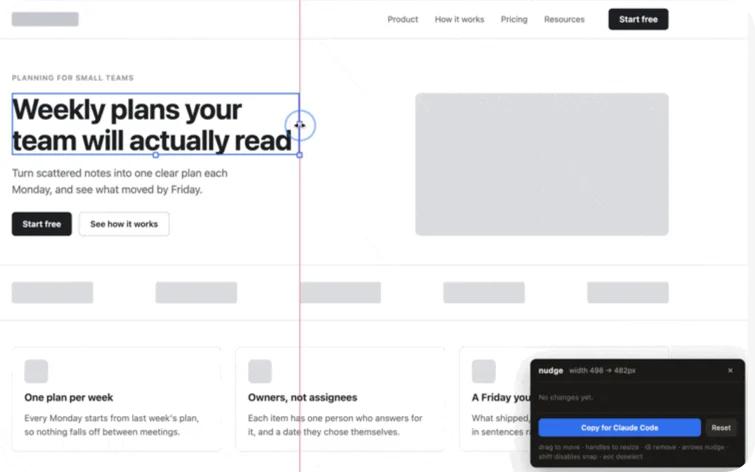
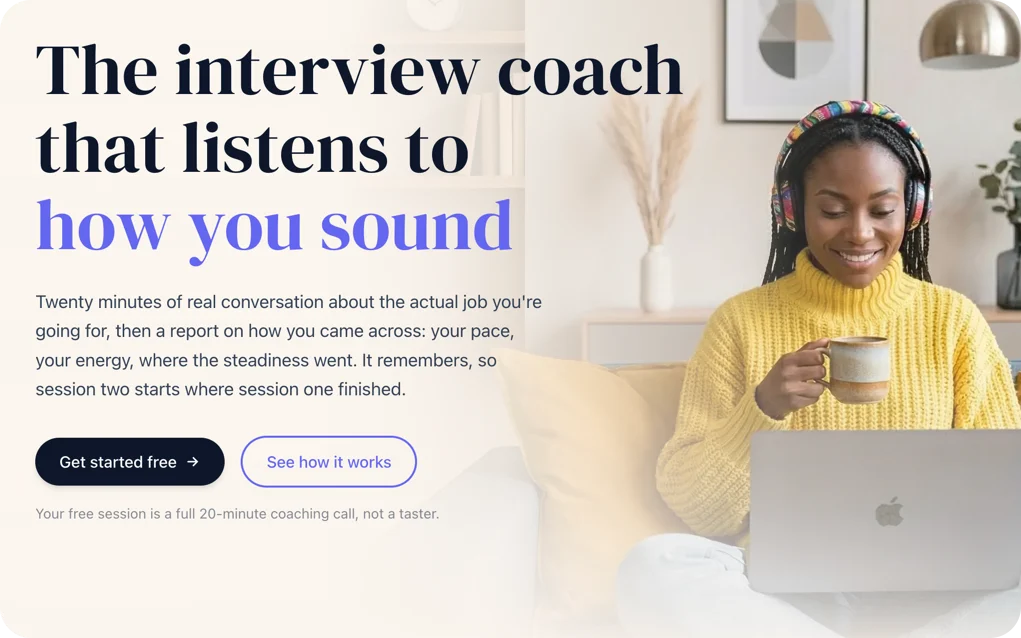
An AI voice coach for interview practice. You speak with it for twenty minutes and it returns a coaching report grounded in what you actually said and how you said it. I designed and built it end to end, including the voice interaction model, the report architecture, and the EU AI Act compliance work.

Visit project

Emotrix

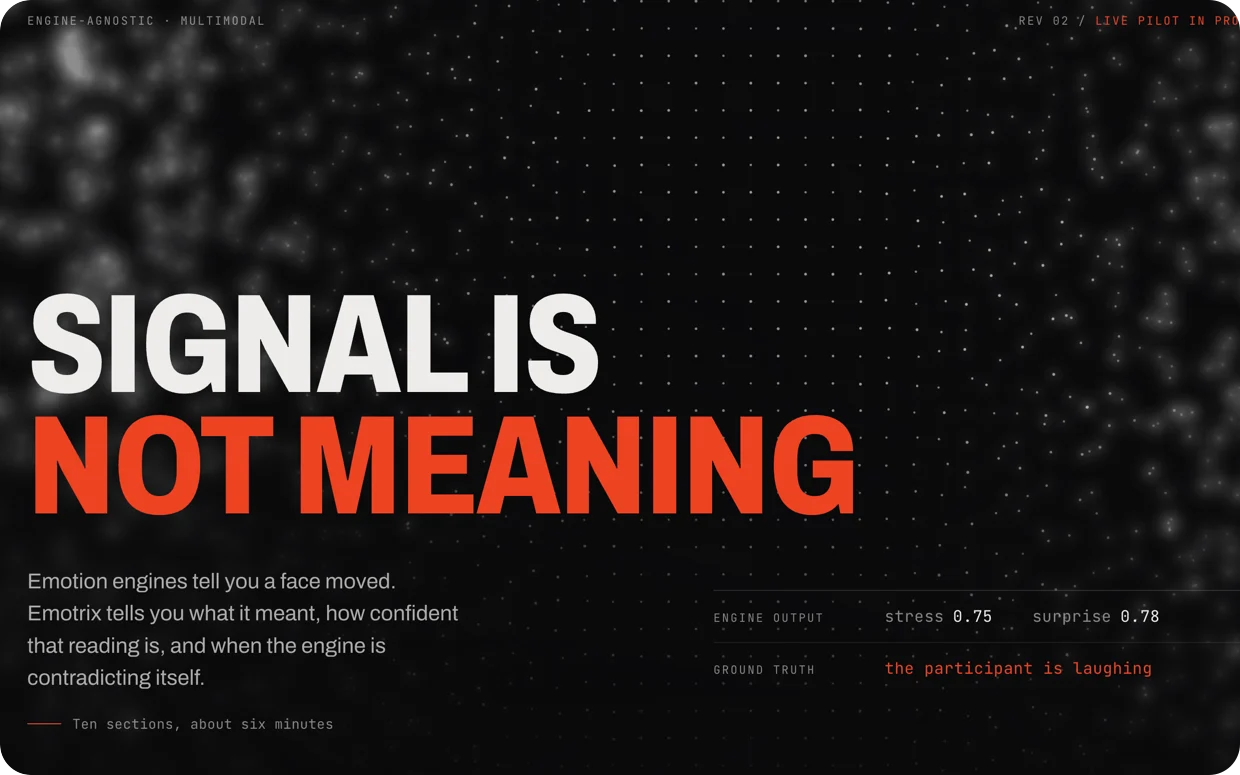
Middleware for multimodal emotion intelligence. The engines that read faces and voices are improving fast, but signal is not meaning: a raised brow means one thing in a usability test and another in heavy traffic. Emotrix is the interpretation layer that supplies the missing context, engine-agnostic by design.

Early stage, in pilot discussion with a tier-one automotive supplier

Verbalised Sampling Skill

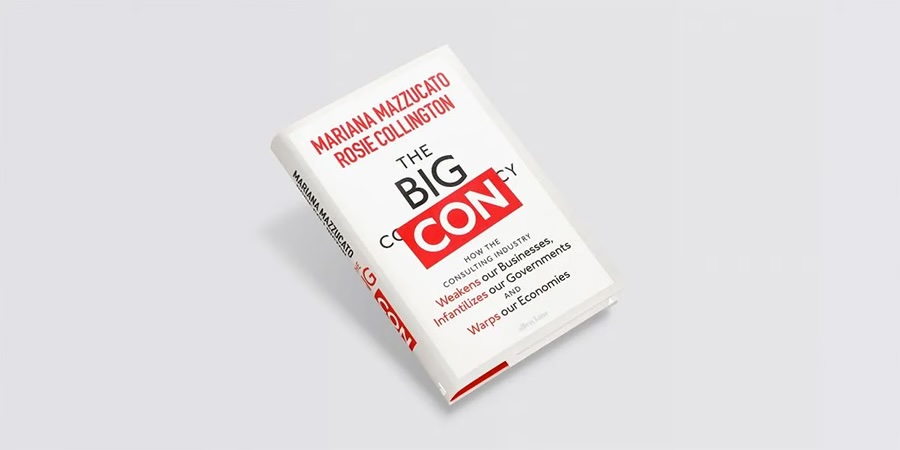
A Claude skill that implements Stanford's Verbalised Sampling technique, recovering diverse outputs suppressed by alignment training. Generates five genuinely different responses instead of five variations on the same safe idea.

Read the article

What I focus on

My expertise sits across three areas that are hard to find in one person: the craft of product and experience design, the organisational work of building and running design teams at scale, and the strategic work of embedding design into how a company thinks and operates.

Craft & Delivery

A disjointed end-to-end experience is usually a faithful reflection of a disjointed business. At Toyota my team built a service design framework on a borrowed idea: treat services the way a design system treats interfaces. Reusable building blocks for the standard customer actions, sequenced into reusable service patterns and packaged as playbooks so every team worked from one source of truth. Build the block once rather than solving the same problem three times in three places. Alongside that, design systems serving multiple platforms, and accessibility as a non-negotiable standard.

  • Product and service design across app, web, and embedded
  • UX research strategy and standards
  • Continuous discovery and validation
  • Design systems direction
  • Accessibility and inclusive design

Organisation & Operations

I've built design teams from scratch more than once. The work includes everything that makes a design function sustainable: team structure, hiring strategy, career frameworks, utilisation, resourcing, and financial performance. At Toyota, the design organisation I built contributed over £10 million in annual internal revenue.

  • Building design teams from scratch
  • Operating models and team structure
  • Resourcing, utilisation, and financial performance
  • Global, distributed teams

Leadership & Influence

Embedding design into organisations that weren't built for it. Sitting in investment discussions, governance boards, and strategic planning. Developing the next generation of design leaders. Positioning design as a partner that shapes direction rather than a service that receives it.

  • Change leadership and digital transformation
  • Embedding design into engineering-led organisations
  • Developing design leaders
  • Coaching, mentoring, and career development
  • Senior stakeholder and executive communication
  • Cross-functional alignment
  • AI integration into design workflows

How I think about the job

Most of my recent work has been leading teams running continuous discovery alongside delivery. Designers embedded with product and engineering, owning problem framing through to shipped experience. The aim is always to close the gap between insight and action.

I've spent most of my career in places where design had to earn its place. Early-stage startups with no design function, large organisations where design was seen as a downstream service, environments where the work was figuring out how to make design matter before you could do the design itself.

That's shaped how I think about the job. The interesting problems aren't usually on screen. They're in how teams are structured, how decisions get made, how design earns trust through consistent, visible delivery. Getting that right is what lets designers do their best work.

Craft isn't separate from outcomes. A well-considered experience is often what drives retention, conversion, and long-term value. But craft without context is decoration. The skill is knowing which problems to solve and why they matter to the business.

AI is collapsing that gap further. I've written more code this year than in the previous twenty. The tools are changing what's possible across the whole lifecycle: research synthesis that took weeks now takes hours, prototyping that can skip wireframes entirely and go straight to something testable, design systems that can be maintained at a fraction of the previous cost. For design leaders, the question isn't whether to adopt these tools. It's how to do it without losing the judgment and craft that make the output worth anything. I've been writing and thinking about this actively, and it's shaping how I approach what comes next.

The part of the job I care most about is developing people. Setting a clear bar, then giving people the context and autonomy to meet it. Several of the team I built at Toyota have told me it was the best team they'd ever worked in. That matters more to me than most metrics.

I think a lot about organisational sustainability: team structure, resourcing, utilisation, and financial performance. Design leaders who can't talk about these things in concrete terms don't get taken seriously at the level where decisions are made. I've sat in on investment discussions, governance boards, and strategic planning sessions. The aim is always to position design as a partner in shaping direction, not a service that receives it.

I studied graphic design in the early nineties, when there was one computer with internet access between forty of us and nobody had a mobile phone. The web arrived while I was learning about typography, print, and communication from Paul Rand and Dieter Rams. I've been working in interactive media ever since, through every wave from CD-ROMs and rave flyers to connected vehicles and AI agents. London has been home throughout.

I'm at a point in my career where the work I find most rewarding is helping other designers grow. Taking chances on people, giving them the room to figure things out, and helping them avoid some of the mistakes I made along the way. Several people I've hired and developed have gone on to lead their own teams, start companies, and do work that's better than anything I could have done alone. That's the part that lasts.

I'm looking for a VP, Head of Design or Design Director role in London, where design needs to become a real function rather than a service desk, and where the AI question is live rather than theoretical. Available now.

Email gideonb@me.com, connect on LinkedIn, or download my CV.