Toyota
From Linear to Continuous: How Toyota is Redefining Product Development for the Digital Age
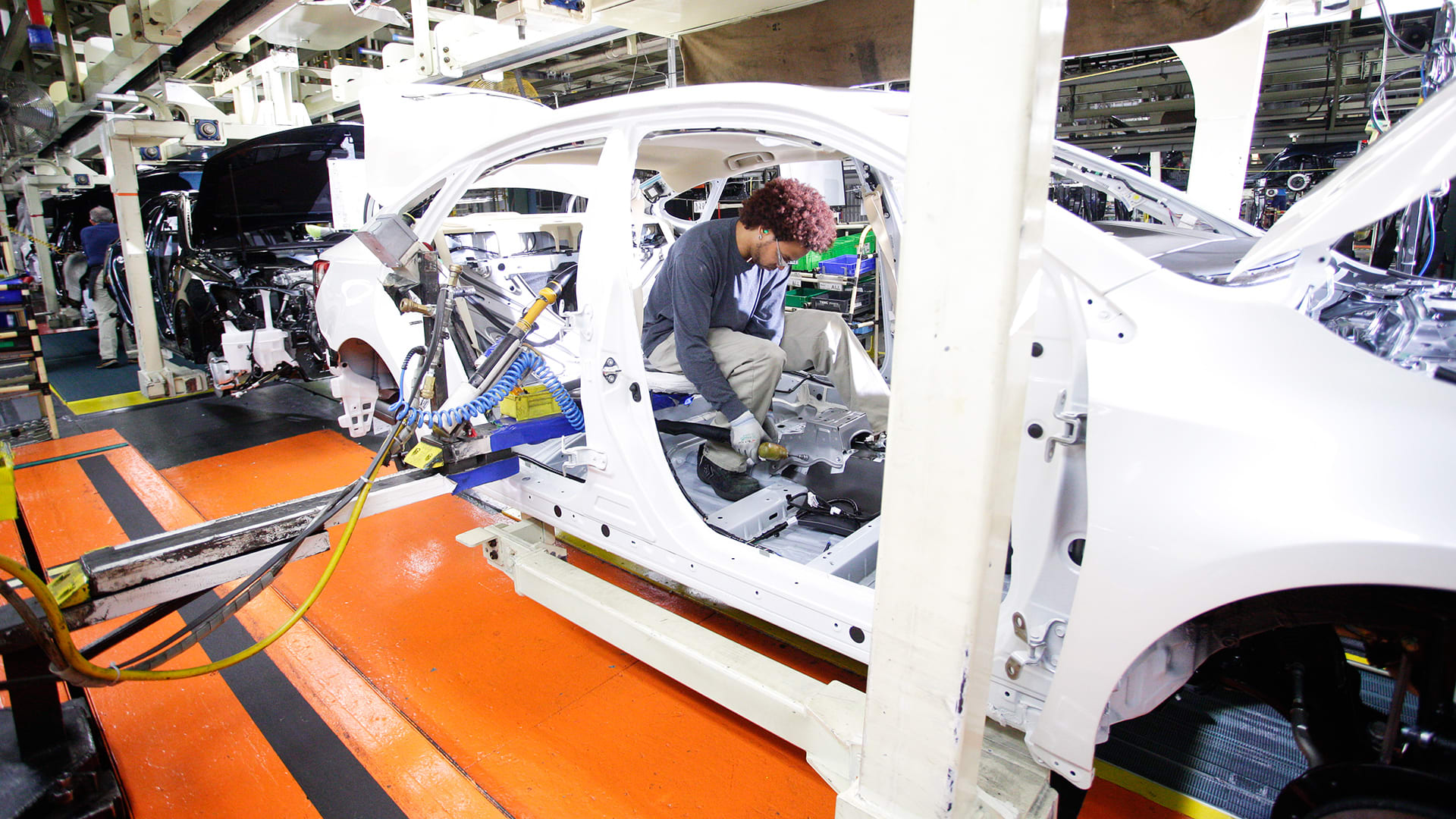
Half of my career has been in early-stage startups. My recent work at a large automotive company has shown me a different set of challenges. Toyota is not just adapting old processes for digital features. They are rethinking how products are made. The changes I have seen there will likely set a new direction for the industry.
This transformation represented one of the most compelling aspects of my work today.
Two Different Worlds of Product Development
The gap between these industries is larger than it looks from the outside. Understanding that gap is essential if you want to work across both.
The Automotive Approach: Precision and Deliberation
Building cars is a methodical process. It starts with long cycles of market research to understand what customers want and where trends are heading. Teams run customer clinics to see how people respond to new ideas. They also benchmark competitors by taking apart their products and learning from them.
Designers create sketches and models, iterating through concepts until they arrive at something that resonates. Engineers transform these concepts into functional prototypes that undergo rigorous testing and refinement across multiple phases, from digital simulations to hand-built prototypes to, eventually, pilot-production vehicles. Third-party technology providers and suppliers are brought in to provide the fundamental building blocks of the product, from semiconductor chips and software platforms to complete subsystems such as infotainment units.
Crucially, the supplier ecosystem becomes deeply integrated into the development process, with Tier 1 suppliers often taking responsibility for entire vehicle systems. Manufacturing preparation involves tooling decisions that will be locked in for years. Given the capital-intensive nature of automotive manufacturing, these decisions carry enormous financial weight and can't easily be changed once production begins.
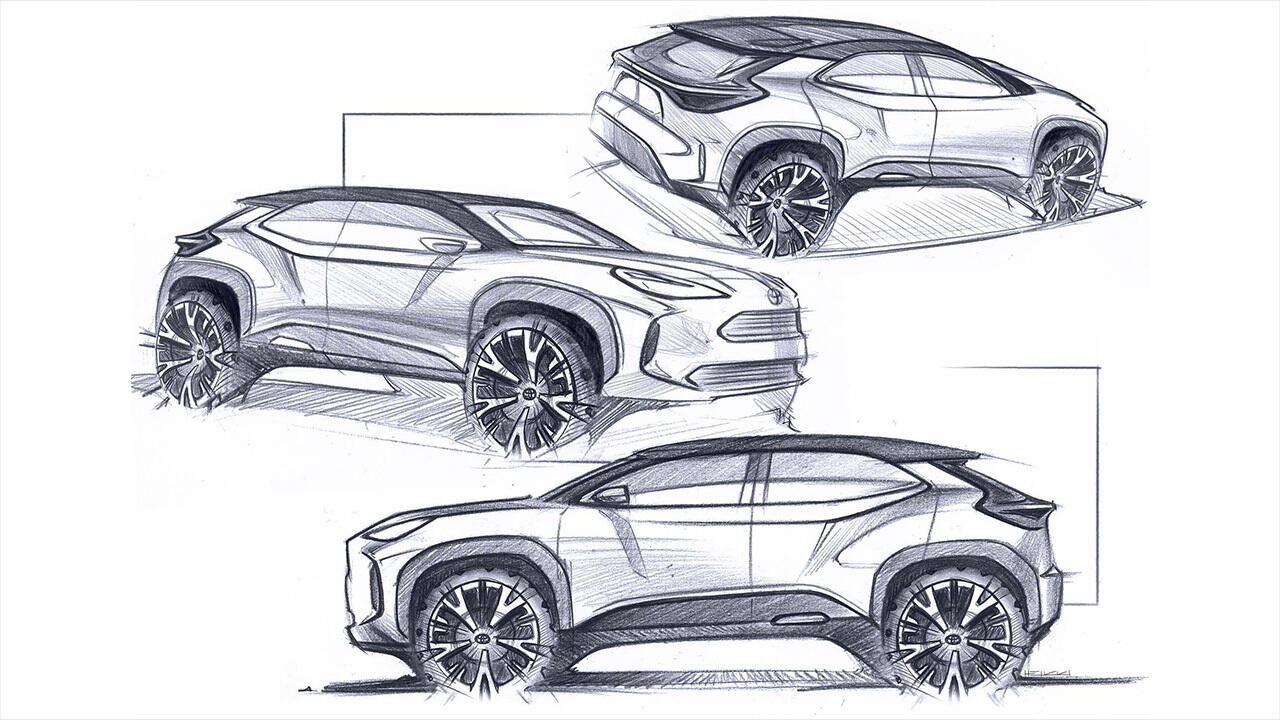
After years of work, the car is finally launched.
This pace looks slow next to startups, but there are good reasons for it. You cannot fix a mechanical problem with a software update. Safety rules require deep validation. Physical limits do not move. When people trust your product with their lives, you have to get it right.
The Digital Approach: Continuous Learning
Digital products operate under entirely different principles. The core philosophy centres on rapid testing and learning, representing more than just faster timelines; it's a fundamentally different way of thinking about product development.
Teams work in short iterations, building products that can be released to users quickly, focusing on delivering measurable value to end customers while learning from how they actually use the product. That user feedback informs the next development cycle, creating a continuous improvement loop.
What I find particularly compelling is that in the digital world, the launch of a product marks the start of ongoing learning.
The Challenge of Integration
When a company built on automotive precision needs to create digital products that adapt and evolve in real-time, interesting tensions emerge.
Timeline Misalignment
The difference in pace is real. I have seen teams spend two years on a digital product, only to find that users wanted something else by launch. This is not bad planning. It is a clash of two ways of working.
Mindset Differences
Folks from the automotive world are trained to think in terms of completion, to validate thoroughly, to finalise decisions, and deliver the solution. Digital teams think in terms of evolution, release quickly, learn from usage, and improve continuously.
Neither approach is inherently superior. They're optimised for different constraints and objectives. But when building digital products in an automotive context, you need methodologies that intelligently draw on both traditions.
Toyota's Systematic Evolution
What I appreciated about Toyota's approach is how the company addresses fundamental challenges. Rather than simply discussing problems, there's a systematic effort to solve them thoughtfully.
The catalyst emerged from an update to the Product Owner Playbook. This document would influence how digital products were created across multimedia systems, companion apps, fleet management tools, and other digital touchpoints throughout the Toyota ecosystem.
Limitations of Existing Frameworks
Toyota had successfully used the Double Diamond methodology for design work. It aligned well with hardware development cycles, with its linear structure of Discover-Define-Develop-Deliver seemingly matching the sequential nature of automotive development.
But applying the Double Diamond framework to digital products revealed limitations, as its linear structure doesn't accommodate the ongoing insights and iterative nature of digital development.
The Double Diamond implies that discovery has a clear endpoint. You progress from discovery to delivery, and the learning phase concludes. But digital products continuously generate insights about user behaviour and needs. Some of our most valuable learnings have emerged months after launch, when we could observe how people actually used features, at scale, in real-world contexts.
Additionally, the Double Diamond's visual clarity often led stakeholders to interpret it through a waterfall lens, even when teams intended more iterative approaches. The framework inadvertently reinforced a sequential approach that doesn't align with how digital products should evolve.
Developing a Hybrid Approach
What followed was one of the more thoughtful process evolutions I've been part of. Instead of abandoning proven methodologies entirely, the teams asked a more nuanced question: How do we maintain the structural clarity that stakeholders understand while incorporating the continuous learning that digital products require?
Developing a hybrid approach involved maintaining four recognisable phases, but these now overlap with feedback loops, enabling continuous learning and adaptation throughout the development cycle.
Opportunity (evolved from "Discover"): Teams focus on identifying opportunities and forming initial hypotheses, while maintaining discovery activities throughout the entire process. Understanding of the problem space deepens continuously rather than reaching a predetermined conclusion.
Exploration (building on "Define"): Rather than converging on a single solution, teams explore multiple approaches simultaneously. This phase emphasises rapid prototyping and user testing to validate different solution paths before committing resources to development.
Development (enhanced "Develop"): development occurs alongside ongoing user research and testing. Teams build incrementally with regular validation checkpoints, allowing honest user feedback to shape what gets built rather than simply executing predetermined specifications.
Market Learning (replacing "Deliver"): Instead of concluding with delivery, this phase focuses on learning from actual user behaviour. Through phased rollouts, analytics, and continuous feedback collection, teams gather insights that inform future opportunities and improvements.
The elegance of this approach is that it maintains a familiar structure while enabling more effective digital product development practices and a clear loop back to discovery or experimentation.
Contextual Adaptation
What I found particularly well considered was how this process adapted to different product types across Toyota's portfolio. Multimedia systems that support over-the-air updates emphasise post-launch iteration and data-driven feature development. Car companion apps can leverage rapid experimentation and A/B testing capabilities.
Implementation and Results
Observing the ongoing transformation from within the organisation has been remarkable. It extended well beyond process documentation; it required the development of new organisational capabilities and a cultural shift that is still underway.
Work went into establishing cross-functional teams that collaborated from project inception rather than through sequential handovers. Investment was made into user analytics platforms, A/B testing infrastructure, and rapid prototyping capabilities. Perhaps most significantly, we began to see success metrics shift from "delivered on time and to specification" toward "improved user outcomes and measurable business impact."
Creating effective collaboration has also required developing a shared vocabulary between designers, engineers, and product managers. Each discipline brings valuable expertise, but building digital products requires genuine collaboration rather than simple coordination.
The Broader Impact
When this approach works effectively, and it increasingly does, the results extend beyond individual product improvements. End customers receive products that genuinely improve over time through software updates and feature enhancements. Experiences adapt to individual usage patterns and preferences.
But what I found most significant was how this reshaped our understanding of what we built. We weren't simply manufacturing vehicles any more. We were starting to build connected platforms that integrated with users' digital lives and continued to evolve after purchase.
The competitive advantages are becoming evident: faster time-to-market for digital features, better user experiences based on actual feedback rather than assumptions, and reduced development costs through early problem identification rather than late-stage corrections.
Looking Ahead
This transformation remains ongoing, which is appropriate. The most successful companies will be those that recognise this isn't about choosing between automotive excellence and digital innovation. It's about evolving methodologies that combine the best aspects of both traditions.
Toyota's experience demonstrates that this evolution is not only possible but essential for long-term competitiveness. And frankly, it represents some of the most engaging work I've encountered in my career.
The path forward remains complex, but for companies willing to embrace this kind of systematic evolution, the potential is substantial.